Difficult Yet Rewarding: Marketing That Challenges Small Businesses

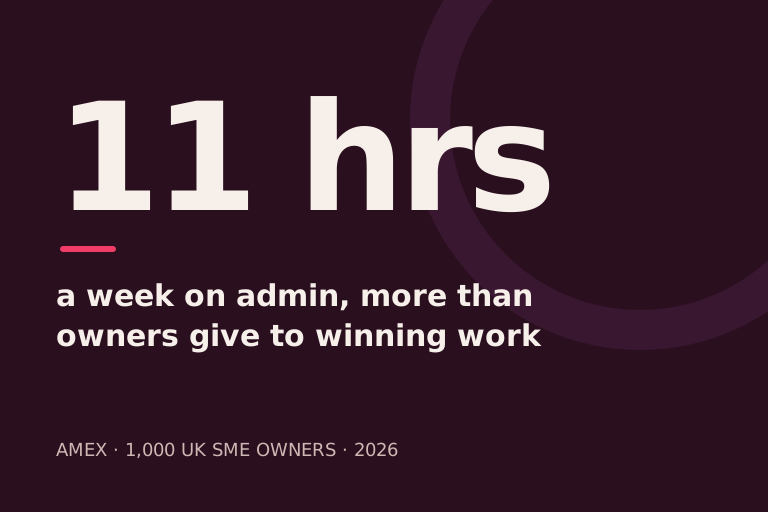
Every marketing guide lists the same strategies: content, a distinct brand voice, personalisation, storytelling and video. They all work. They also all eat time, which is exactly what a small business is short of. Here is each one, the hurdle it creates, and how to clear that hurdle in 2026.
1. Content marketing
The challenge: consistent, good content takes hours every week, and AI has made average content so cheap that average no longer stands out.
What works now:
- Start from your own knowledge. Record what you would tell a client, then shape it, instead of asking a tool to invent a topic.
- Turn one idea into several formats: a post, a newsletter section, a carousel.
- Keep a human approval step. Our content engine turns a voice note into posts, newsletters and carousels in the client's voice, and nothing publishes until they approve it.
2. An authentic brand voice
The challenge: sounding like yourself across your website, LinkedIn and email, especially once AI tools are writing some of the words.
What works now: write your voice down. List the words you use, the phrases you never use, how formal you are, and the claims you will not make. Give that document to every person and every tool that writes for you. We check every outreach draft against each client's own rules before it goes out. Drafts that fail get three rewrites, and if they still fail they are held. Across our accounts, that check has stopped 1,420 weak AI drafts before they went out.
3. Personalisation
The challenge: in 2024, personalising messages meant collecting and analysing data you probably did not have time to handle.
What works now: writing for one person has become cheap. A message can refer to something a person posted last week or a change in their role, drawn from their public profile. On one client account, messages written this way drew replies from 13.6% of people, against 7.7% for his own templates, with the same audience and sequence over 16 weeks. A reply means any reply, including "no thanks".
Keep it lawful. The ICO's guidance on business-to-business marketing explains that in the UK you can email companies without prior consent under PECR, but you must say who you are and give a valid way to opt out. Sole traders and some partnerships are treated as individuals, with stronger protections, and UK GDPR still applies to a named person's details. Make opting out easy, and honour it.
4. Storytelling
The challenge: telling stories that feel real without exaggerating or breaking a client's confidence.
What works now:
- Use real situations, with permission, described as generally as the client needs.
- Tell the before and after, including what went wrong along the way.
- Never invent a testimonial or a result. Readers can usually tell, and the CMA has published guidance on the UK law that now bans fake reviews.
5. Video
The challenge: video looks expensive and slow to make.
What works now: Wyzowl's 2026 video marketing survey found that 91% of businesses use video. Among those that do not, the most common reasons were not feeling it was needed and cost (24% each), followed by lack of time (19%). Start with a phone and a quiet room: one short answer to a client question each week is enough. Simple and regular beats polished and rare.
Pick two, and do them properly
You do not need all five at once. Choose the two that fit how your clients find you, give them a proper go for three months, and judge them on the conversations they start. Likes are pleasant, but they do not pay invoices.
If the hours are the real problem, the 10-Hour Audit maps where your week goes and which jobs can be automated.