Staying Ahead of the Curve: How Small Firms Can Embrace Technology

In 2024 I wrote that staying ahead of technology was no longer optional for small businesses. That is still true, but the problem has changed. Plenty of small firms have tried AI by now. Few use it deeply.
The Office for National Statistics found that in June 2026, 28% of businesses with fewer than ten employees used at least one AI technology. Among firms with ten or more employees that use AI, only 10% said they used it extensively. Here is a practical plan for getting real value from technology in 2026.
1. Identify what is costing you time
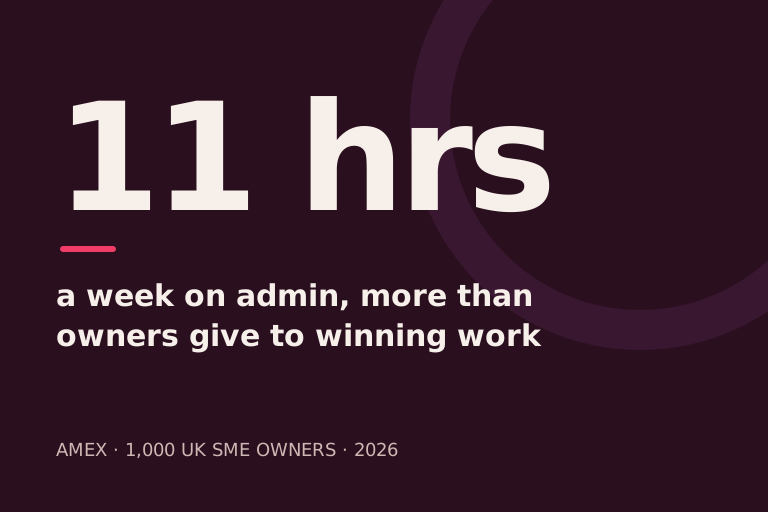
For one week, note every task you do more than once. In the small firms I work with, the same list keeps appearing: invoices, onboarding packs, CRM updates, contracts, reports, follow-up emails and scheduling. Those are your candidates.
2. Prioritise by hours saved
Rank each task by how often it happens and how long it takes. A ten-minute job done every day is worth more to automate than a two-hour job done once a quarter. Ignore any tool that does not solve a problem on your list, however much attention it is getting.
3. Choose systems you own
Cloud tools are still the right default: no servers, access from anywhere, pay as you go. The 2026 addition is ownership. Make sure accounts are in your business's name, your data can be exported, and any automation runs on systems you control, so you are never locked in to a supplier.
4. Automate the repetitive work
The 2024 version of this article suggested scheduling tools and hiring virtual assistants. Today most of those jobs can be automated end to end:
- Invoices raised and chased automatically.
- Onboarding packs and contracts sent the moment a client signs.
- CRM records kept up to date from your inbox and calendar.
- Weekly reports built without anyone copying figures between spreadsheets.
This is the idea behind "10 Hours to 10 Seconds". The running costs can be small: on our own outreach platform, the AI cost of writing and checking messages was about $3 to $6 per 1,000 messages in August 2026. Keep a human approval step wherever a mistake would reach a client.
5. Take cyber security seriously
The government's Cyber Security Breaches Survey 2025/26 found that 43% of UK businesses identified a breach or attack in the previous 12 months, including 42% of micro businesses and 46% of small ones. Phishing was by far the most common type, experienced by 38% of businesses. Yet only 47% of businesses had multi-factor authentication in place.
- Turn on multi-factor authentication for email, banking and anything holding client data.
- Back up automatically, and test that you can restore.
- Keep devices and software updated.
- Use the NCSC's Cyber Essentials scheme as a checklist, even if you never certify.
6. Keep learning, one tool at a time
Pick one new tool or automation per quarter, give it a fair trial, and keep it only if it saves measurable time. That is enough to stay current without drowning in options.
7. Get help where it pays
I no longer offer virtual assistant services, because most of that work is now better automated. If mapping and automating your processes feels like a project you will never get round to, that is what the 10-Hour Audit is for: ten hours of my time, £600, to map where your week goes, plan what to automate first and build the first automations on systems you own.