The Power of Community: Why Building One Strengthens Your Brand

When I first wrote this piece in 2024, "build a community" sounded like advice for big consumer brands with a social media team. Two years on, it matters even more for small firms, because trust has become the first thing a buyer checks.
Why community matters more in 2026
Edelman's 2026 Trust Barometer special report on brands, based on 17,688 interviews across 15 countries, found that 88% of people say trusting a brand is an important or critical reason to buy, level with quality (89%) and value (88%). The same report found that what people who are not paid by a brand say about it carries far more weight than what the brand says about itself.
That is the case for community in two sentences. A community is a place where other people do the talking for you.
What a community gives a small business
- Advocacy: members who have had a good experience tell others, in their own words, which is the kind of recommendation people believe.
- Insight: you hear your clients' questions and objections in their language, which makes your content and your offers sharper.
- Retention: clients who know each other have a reason to stay involved between sessions or projects.
- Trust before the first call: a prospect who has watched you answer questions for a month arrives already half convinced.
How to build one without it taking over your week
- Define who it is for. A community for "anyone interested in growth" attracts nobody in particular. Write down your ideal client and build for them.
- Pick one place. A LinkedIn group, a Circle space, a WhatsApp group or a monthly call. One you will actually turn up to beats three you neglect. If you are weighing up a dedicated platform, I have written about building a coaching community with Circle.
- Give before you ask. Answer questions, share templates, run a short Q&A. The pitch can wait.
- Set the rules early. A few clear house rules and light moderation keep the space safe enough for people to speak honestly.
- Recognise contributors. Thank the people who help others, by name. It costs nothing and keeps them coming back.
You already have the start of one
Many consultants and coaches have built up thousands of LinkedIn connections they have never messaged. That network is a community in waiting: people who have already said yes to you once.
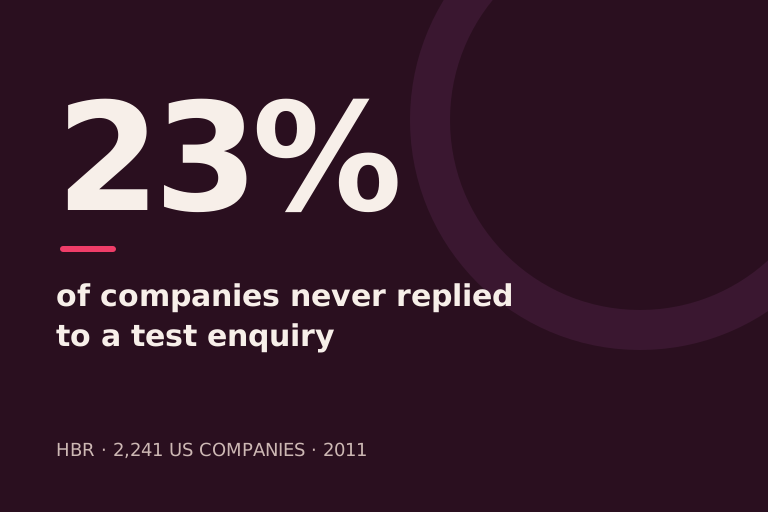
Our own data backs this up. On every client account we run that tried both, warm outreach to existing connections beat cold outreach by 2x to 5x on reply rate. My own warm campaigns drew replies from 24% of people (561 of 2,292). A reply here means any reply, including "no thanks", but each one is a real conversation with someone who already knows your name.
Trust is built the same way everywhere
The second half of the original article was about trust in the buying process, and that advice has aged well. Whether you are hosting a community or starting a conversation:
- Listen first. Ask about their situation before you describe yours.
- Be specific and honest. Say what you can do and what you cannot. Exaggeration is easy to spot.
- Follow through. Do what you said, when you said you would.
- Make it easy to say no. An easy opt-out tells people you respect their time.
That last point is why every outreach message we send is checked against the client's own rules before it goes out. Drafts that fail get three rewrites, and drafts that still fail are held. Across our client accounts, 1,420 weak AI drafts have been stopped before they went out. One careless message can undo months of goodwill.
If you want to know how much of your existing network fits your ideal client, that is the first thing we work out when outreach is set up.