AI-written messages vs templates: a 16-week head-to-head
"Does the AI actually write better than I do?" It is a fair question, and for one client we were able to answer it properly.
The setup
The client is an SME business coach and mentor in the UK. Over 16 weeks we sent 1,390 connection requests on his behalf, and 29% were accepted, which gave him 407 new connections in his target market.
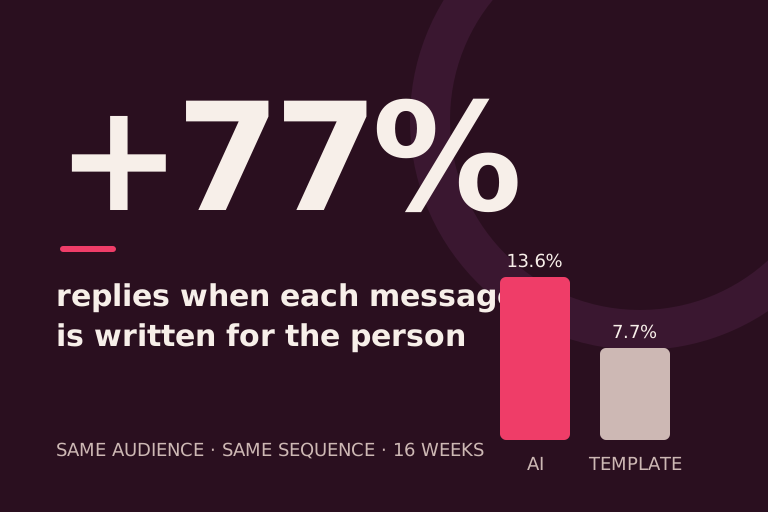
He already had message templates he liked, so we ran them head to head. Same audience, same sequence, same timing. Half the new connections received his templates. The other half received a message written for that person, from their profile and recent activity, then checked against his house rules before sending.
The result
AI-written messages drew replies from 13.6% of the people contacted. His templates drew 7.7%. That is 77% more replies from the same people, for the same effort on his side.
Why it worked
A template has to work for everyone, so it says nothing that is true of anyone. A message written for one person can mention the thing they posted last week, the change they made at work, or the problem their role tends to have. That is what earns a reply.
It only works if the writing is held to a standard. Left alone, an AI will happily invent a shared connection, guess at a date, or reach for the same three phrases every other automated message uses. That is why every draft we send goes through a quality gate first. More on that in why we stopped 1,420 drafts.
What it does not prove
One account, one audience, 16 weeks. It is a strong signal, not a law of nature, and a weak offer will not be rescued by better copy. But it is the cleanest comparison we have run, and it matches what we see on every other account.