Top Challenges Facing Small Businesses in 2026 and Beyond

In early 2024 it looked as if the worst was over for small businesses. It was not. Here are the main pressures on UK small firms as of October 2026, with the evidence, and what a small team can actually do about each one.
The Federation of Small Businesses' Small Business Index for Q2 2026 found that just 18% of small firms expect to grow over the next year, the lowest figure since the index began at the end of 2014, while 32% expect to shrink, change hands or close. Some 89% reported higher running costs than a year earlier.
1. Costs, inflation and borrowing
- Inflation is rising again. CPI inflation was 3.1% in the 12 months to August 2026, up from 2.9% in July.
- Borrowing is still expensive. The Bank of England held Bank Rate at 3.75% in September 2026, and three of the nine committee members voted to raise it to 4%. The Bank pointed to energy prices pushed up by conflict in the Middle East.
2. Staff costs
- Employer National Insurance. Since 6 April 2025, employers have paid 15% (up from 13.8%), starting at £5,000 a year of each salary instead of £9,100. The Employment Allowance rose to £10,500, which shields the smallest employers.
- Wages. The National Living Wage rose to £12.71 an hour from 1 April 2026, a 4.1% increase.
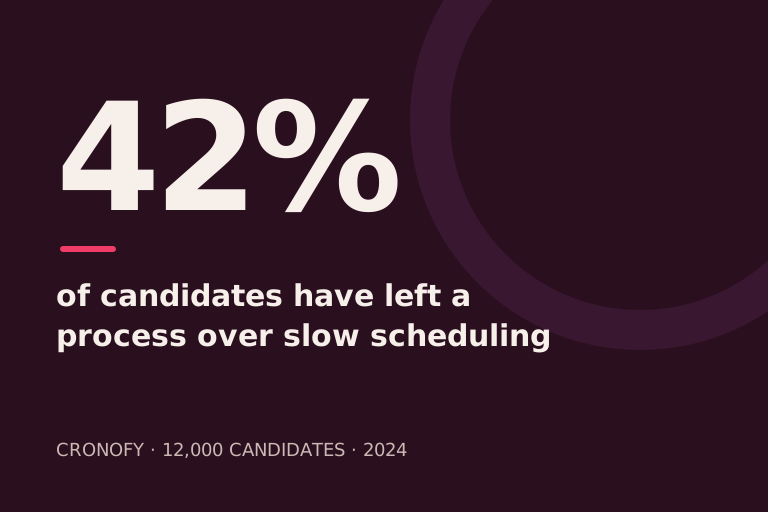
- Hiring. Finding and keeping good people is still hard, and every hire now costs more.
3. The digital landscape
- Cyber security. The Cyber Security Breaches Survey 2025/26 found that 43% of UK businesses identified a breach or attack in the past year, with phishing the most common. I cover the basics in how small firms can embrace technology.
- AI. According to the ONS, 28% of businesses with fewer than ten employees used at least one AI technology in June 2026, and the ONS describes most adoption so far as shallow. That leaves room for a small firm that uses it properly.
- Search. When Google shows an AI summary, people click through to websites far less often. More on that in what Google's updates mean for your site.
4. Competition
Clients can now hire from almost anywhere, which widens your market and your competition at the same time. Small firms still win on relationships, as long as they keep those relationships warm.
5. Marketing and winning clients
- Reaching the right people on a small budget, across too many channels.
- Standing out when AI has made content cheap and plentiful.
- Measuring what works when most activity produces likes rather than conversations.
My view is that targeted outreach to a well-defined ideal client, with an easy opt-out, is far more reliable than hoping organic content converts. We have contacted 15,282 decision makers across four client accounts this way. We count replies, and a reply means any reply, including "no thanks". We never promise meetings, because nobody can honestly count those in advance.
What a small team can do now
- Protect cash. Automate invoicing and payment reminders, so late payers are chased on time, every time.
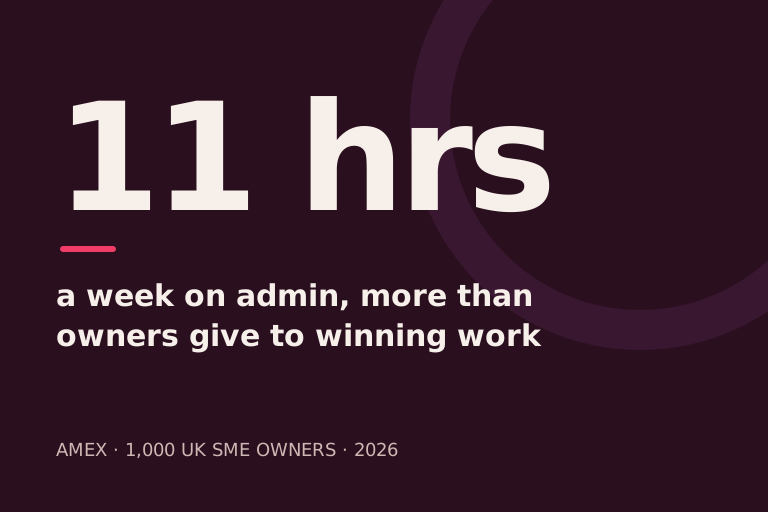
- Cut admin hours before cutting people. Onboarding packs, contracts, CRM updates and reports can run without anyone retyping them.
- Use fewer channels, properly. One or two you can sustain beat five you abandon.
- Start with your network. On every account we run that tried both, warm outreach to existing connections beat cold by 2x to 5x on reply rate.
The 2024 version of this article ended by offering virtual assistant services. I no longer offer those, because most of that work is now better automated. If you want to see how much of your week could be, the 10-Hour Audit is ten hours of my time to map it and build the first automations.