Where an owner's week goes, and what an extra day would buy
Ask an owner what they would do with an extra day a week and most have an answer ready: the new offer, the market they keep circling, the part of the business only they can move. Then the week fills up again. This year's surveys show where it goes.
Admin gets more of the week than growth
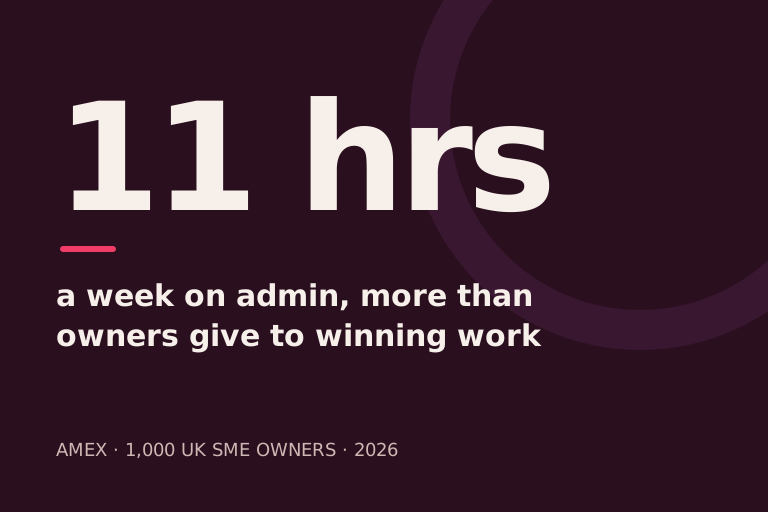
In a survey of 1,000 UK small business owners by American Express and Small Business Saturday UK, reported by Startups Magazine, owners estimated they spend 11 hours a week on admin and finance tasks, around six working days a month. Sales and business development got about 3.6 days a month. More than a third said their own lack of capacity was the biggest barrier to growth.
Tax is a large part of it. The FSB's Taking a Toll report put tax compliance at 44 hours and £4,500 a year for the average small firm, and 60% of owners said dealing with HMRC had raised their stress levels.
And the hours are already long
Tide's survey of 500 UK owners found that 29% work more than 48 hours a week, the legal maximum for employees, and 17% took no full days off at all. In the US, 53% of owners in Bluevine's 2026 burnout survey said stress had left them emotionally drained in the past year, and 82% told Intuit QuickBooks they had made significant personal sacrifices, with sleep the most common one.
Small firms are the slowest to hand any of it over
The ONS's latest business survey found that 29% of businesses with fewer than ten employees use AI, against 51% of those with 100 or more. Among firms that do use it, admin and clerical work is the area most affected. In the US Census Bureau's survey, the most common reason firms give for not using AI is that it is not applicable to their business.
For most small firms, the useful step is to sit down with the actual week and find the parts that repeat.
Keep the promise honest
Independent research on time saved is real but modest. The OECD's study of 5,232 small firms found that a third reported a lighter workload from generative AI, and one-person businesses were the most likely to say so. The St Louis Fed found that generative AI users saved about 2.2 hours a week on average.
Those figures are for people using general AI tools as they go. In my own client work, the hours come back when one specific job is built to run on its own. One solo coach now gets her monthly invoices drafted in Xero from her timesheet, ready for her to approve, instead of building them by hand.
Where to start
- Write down a normal week. Every task that repeats, and roughly how long it takes.
- Mark the ones that follow the same steps every time. Invoices, reminders, reports, onboarding and chasing usually top the list.
- Put a price on your own hour. Then decide which of those jobs you would pay never to do again.
That is how the 10-Hour Audit starts: a map of where your week goes, a costed plan, and one or two of those jobs running by the end. What you do with the day you get back is up to you.