Where a recruiter's week goes, and the hours worth taking back
Most recruitment firms are small. The REC's industry status report found that 77% of UK recruitment businesses have fewer than ten staff. In a firm that size, every hour a consultant spends on admin is an hour not spent with a client or a candidate, and the surveys suggest there are a lot of those hours.
Where the time goes
- Search. Bullhorn's 2025 GRID survey of more than 1,500 recruitment professionals put the time spent searching for candidates at 14.6 hours a week.
- Scheduling. GoodTime's 2026 study of more than 500 US hiring leaders found that 38% of recruiter time goes on scheduling interviews. Those are in-house teams rather than agencies, but anyone who has lined up three diaries for one interview will recognise it.
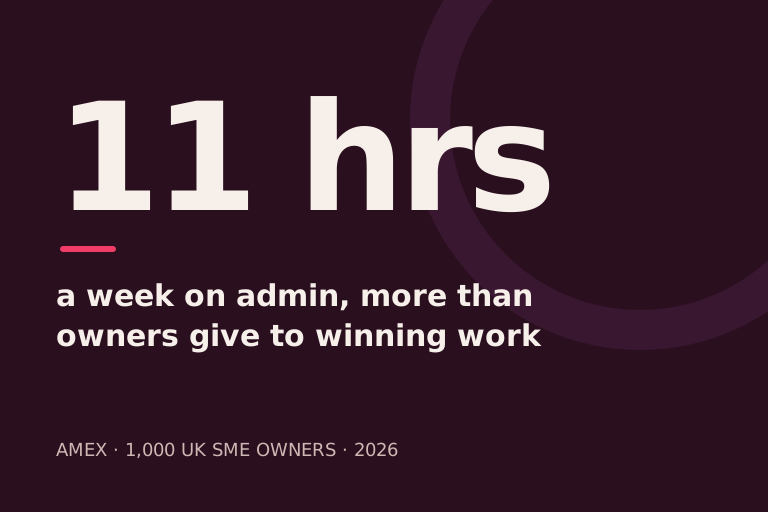
- Admin per vacancy. A Totaljobs survey of UK HR leaders, reported by HR News, put manual admin at 17.7 hours for every vacancy.
Slow processes lose candidates
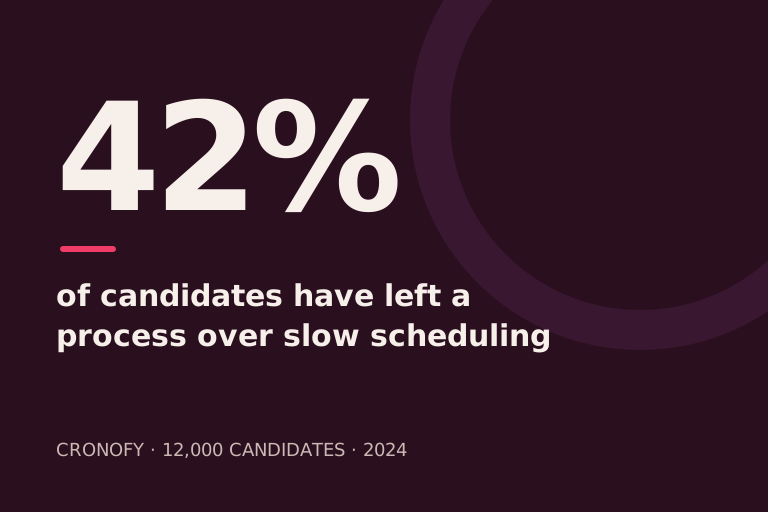
This is where admin stops being a cost and starts losing placements. In Cronofy's 2024 survey of 12,000 candidates, 42% said they had left a recruitment process because scheduling an interview took too long. The 2025 CandE benchmark research found the most common reason candidates withdrew was that their time had been disrespected, given by 32% of those who pulled out. And Greenhouse found that 56% of UK candidates had been ghosted after an interview.
For an agency, a candidate who drifts away mid-process is a fee that never lands. Bullhorn's 2026 report found that two to three in five candidates who receive an offer still turn it down, most often for a better offer elsewhere. Speed and contact are two of the few things a firm fully controls.
What recruiters say AI is saving
LinkedIn's Future of Recruiting research found that recruiting teams experimenting with or using generative AI save about 20% of their working week, roughly a day. Bullhorn's 2026 survey found that firms using AI were more likely to have grown revenue, though that is a correlation reported by a company that sells AI-enabled software, so I would not lean on it. The more modest figure is the more useful one: in Atlas's survey of agency recruiters using AI, the middle answer was three to five hours saved a week, mostly on CRM updates and notes.
The hours worth taking back
- Interview scheduling. Candidates pick from live slots, reminders go out by themselves, and a reschedule does not need a phone call.
- Keeping candidates warm. A short update at every stage, so nobody goes three weeks without hearing anything.
- CRM upkeep. Call notes, status changes and follow-up tasks written up from the conversation, for the consultant to check.
- Chasing feedback. Nudges to hiring managers that go out on schedule, with the consultant told only when one stalls.
The calls, the judgement about fit and the relationship with the client stay with your consultants. That is the part clients pay a fee for. With UK permanent placements rising in August and September, the first rises since 2022 in the KPMG and REC Report on Jobs, the firms with spare hours will be the ones able to take the extra work.
If you want to see where the hours go in your own firm, that is the first thing the 10-Hour Audit maps.